
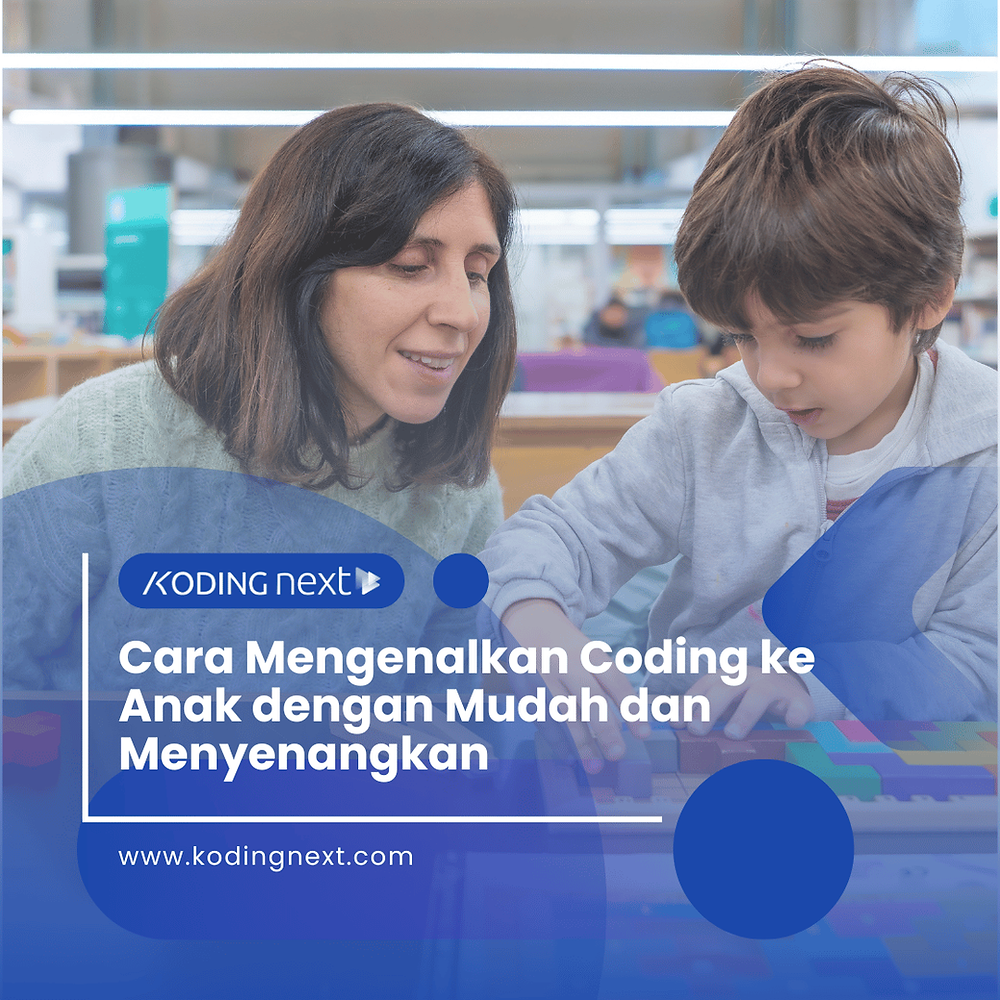
In a context of increasingly rapid technological development, digital skills have become an important asset for children from a very young age. One of the most introduced skills today is coding because by learning to code you can train logic, creativity and systematic thinking. What’s even better, mom and dad, is that learning to code doesn’t wait until your child reaches adulthood. With the right method, children can begin to learn about it through fun and easy-to-understand activities.
How to introduce coding to children?
Many parents are starting to look for ways to introduce coding to their children at a young age, as digital skills will become more and more important in the future. In the digital age, children not only use technology, but also need to understand how it works. One of the best steps is to introduce coding at a young age.
However, coding is often considered complicated and only suitable for adults. In fact, kids can learn to code with a simple and fun method. The main goal is not to directly become a programmer, but to develop logical thinking, creativity and problem-solving skills.
With the right approach, coding can become a child’s favorite activity. The following is a comprehensive guide that parents can apply.
Present coding as a fun activity
The first step to introducing kids to coding is to make them feel like coding is fun. Parents, don’t start with heavy theories or confusing technical terms. Show that coding can be used to create games, animations, interactive stories, or moving robots. Children will be more interested when they see the real results of what they created. For example, characters that can walk, simple games that can be played, or images that move on the screen. When children find coding fun, their curiosity naturally grows.
How to Introduce Coding to Kids Based on Their Age and Abilities
Parents should keep in mind that every child goes through a different stage of learning. It is therefore important to choose a method adapted to their age and abilities so that the learning process is enjoyable.
Age 4-6 years
At this age, children don’t yet need to type code. Focus on basic logic such as patterns, sequence of steps, direction, and cause and effect. You can invite your children to play puzzles, arrange blocks or play board games. The concept of coding from a young age should be introduced through games.
Age 7-9 years
Children are beginning to be ready to use block-based visual platforms such as Scratch and Blockly. They can arrange controls using drag and drop to create simple animations or games. This method helps children understand the relationship between instructions and results.
Age 10-12 years
At this stage, children usually begin to understand concepts such as loops, conditions, and variables. They are also more interested in creating digital projects based on their own ideas.
Age 13-16 years
Teenagers can start learning programming languages such as Python or JavaScript. They can also try creating websites, apps or games with a higher difficulty level.
Use interactive learning media
Introducing coding to children will be more effective if you use interactive learning media. Children tend to get bored quickly if they only read theory or watch one-sided explanations. Parents can help choose media that inspires children to actively try, experiment, and see immediate results. Some options you can try:
-
Logic-based educational game
-
Platform coding visual
-
Robotics for children
-
Short Coding Challenge
-
Project creates a simple game
-
Coding course with mentor
When children are directly involved, the learning process seems more alive.
Connect coding to children’s interests
Every child has different interests. Some people like to draw, play games, tell stories, or put things together. Use this interest as an entry point to learning coding. If your child likes to draw, invite him to create animation. If you like games, help them create simple games. If you like stories, present an interactive story project. If you like robots, aim for coding and robotics. This method gives children the feeling that coding is close to their world and not something foreign.
Support without controlling too much
Parents don’t need to be coding experts to support their children in learning. Simple support can go a long way. Support them when they try, encourage them when they struggle, and appreciate their efforts. When your child makes a mistake, don’t correct everything immediately. Let them try to find solutions themselves. So mom and dad can ask questions like
-
Why do you think this game hasn’t launched yet?
-
If this button is replaced, what happens
-
Do you want to try another method?
This approach helps children think independently and be more confident.
Create a consistent study schedule
Learning to code doesn’t have to take hours every day. For children, starting with short sessions may be more effective. For example 30 to 60 minutes several times a week. What is important is consistency and a pleasant learning atmosphere. If your child is tired, you can rest first. The initial goal is to develop a learning habit and love of coding.
Celebrate children’s small achievements
When your child successfully completes a small project, thank them. No need for a big gift. Sincere praise is enough to motivate you. For example,
-
Wow, your game is fun
-
Cool, the character can jump
-
Great, you found your own solution
A little appreciation makes children feel like their efforts are appreciated and they are more enthusiastic about learning.
Benefits of learning coding for kids
Coding offers many useful benefits for the future and everyday life.
Children learn to think coherently and understand cause and effect.
They can turn ideas into digital works.
When a mistake occurs, children learn to find a solution and try again.
Coding drives accuracy and attention to detail.
When they successfully complete their own project, children will feel proud.
Learning coding is easier with the right mentor
Many parents want to start implementing ways to introduce coding to their children, but don’t know where to start. This is where the role of coding courses with a focused curriculum comes in handy. One of the best options is Koding Next. The program is specially designed for children aged 4 to 16 with learning methods adapted to their developmental stage.
At Koding Next, kids can learn coding, robotics, game creation, app development, and various future digital skills. All material is presented in a fun, interactive and easy to understand way. Accompanied by experienced mentors, children not only learn theory, but also create real projects that increase creativity and self-confidence. If mom and dad want to get started now, visit Next coding to see the available programs.
How to introduce coding to kids doesn’t have to be complicated. Start with fun activities, adapt them to the child’s age and give them space to explore. The main goal is not only to learn technology, but also to develop logic, creativity and the courage to try new things. With the right support, children can enjoy the learning process and have important provisions for the future.
PakarPBN
A Private Blog Network (PBN) is a collection of websites that are controlled by a single individual or organization and used primarily to build backlinks to a “money site” in order to influence its ranking in search engines such as Google. The core idea behind a PBN is based on the importance of backlinks in Google’s ranking algorithm. Since Google views backlinks as signals of authority and trust, some website owners attempt to artificially create these signals through a controlled network of sites.
In a typical PBN setup, the owner acquires expired or aged domains that already have existing authority, backlinks, and history. These domains are rebuilt with new content and hosted separately, often using different IP addresses, hosting providers, themes, and ownership details to make them appear unrelated. Within the content published on these sites, links are strategically placed that point to the main website the owner wants to rank higher. By doing this, the owner attempts to pass link equity (also known as “link juice”) from the PBN sites to the target website.
The purpose of a PBN is to give the impression that the target website is naturally earning links from multiple independent sources. If done effectively, this can temporarily improve keyword rankings, increase organic visibility, and drive more traffic from search results.

