Many parents are starting to realize that coding and technology skills are no longer extra skills. In the digital age like today, the ability to think logically, solve problems and understand technology has become an important condition for a child’s future. The problem here is that not all lessons allow children to truly enjoy the learning process. Many coding courses focus too much on theory, memorization, or simply following instructions without understanding the process. As a result, children quickly become bored and lose interest.
In fact, children generally learn faster when they practice directly and see the results of what they create. Therefore, the project-based learning method is one of the most effective approaches to learning coding and robotics.
Project-based coding and robotics lessons make kids more active in learning
Learning to code is actually similar to learning to ride a bike. Children won’t really understand by just reading theory or watching videos. They have to try, make mistakes, and then find their own solutions. This is why the project-based learning method is the main approach at Koding Next.
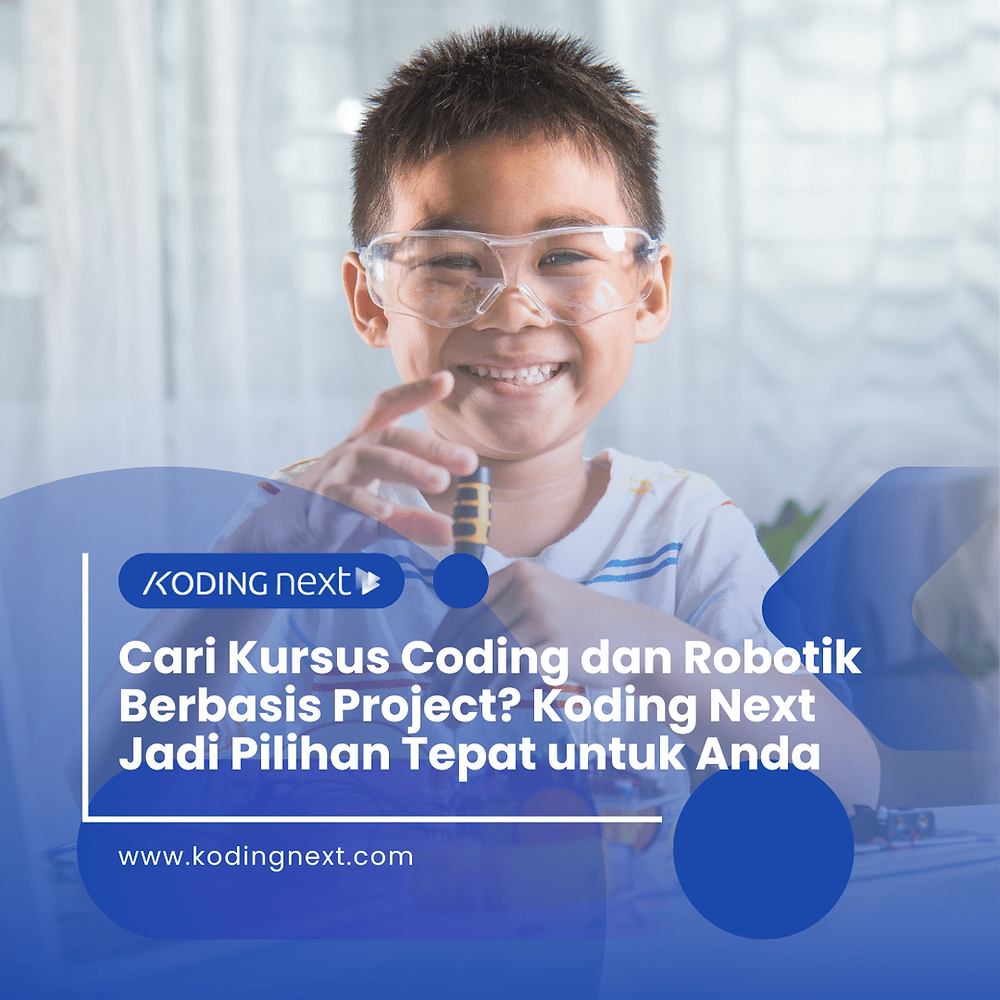
Here, children don’t just sit and listen to the teacher’s explanations. They will immediately create real projects based on their age and learning level. For example, kids can create simple games, design line-following robots, create Arduino-based smart cars, and even create simple smart home systems. By learning this way, children become more active in asking questions, trying new ideas and learning to think creatively.
Project-based methods also help children understand how technology is used to solve everyday problems. This is important because tomorrow’s workplace requires people who can not only memorize theories, but also think critically and create solutions.
Koding Next doesn’t just teach coding
One of the things that sets Koding Next apart is its more comprehensive learning approach. Kids learn not only to write code, but also to think like a problem solver. In the classroom, children will learn various important skills such as
-
think logically
-
creativity
-
communication
-
collaboration
-
conceptual thinking
-
presentation skills
All of these abilities are trained through the projects they work on during classes. For example, when kids make simple robots, they’re not just learning to code. They also learn to develop strategies, understand how sensors work, overcome errors and present the results of their projects. An approach like this makes the learning process much more vivid than conventional learning methods.
Age-appropriate curriculum
Many parents worry that their child has no prior coding experience.
The good news is that Koding Next is designed for beginners. The program is developed in stages depending on the age and abilities of the child so that the learning process is more comfortable and does not stress the child. For younger ages, learning is made more visual and interactive through block coding and creative activities. Meanwhile, older children begin to learn text-based coding such as Python and C++ and become familiar with robotics, artificial intelligence and the Internet of Things. Children will also use various modern tools such as Arduino, WhalesBot, drones and IoT kits. With a gradual approach like this, children can develop naturally without feeling left behind.
Project-based learning helps children become more confident
One of the biggest challenges when learning to code is the fear of making mistakes. Many kids end up struggling with coding because they focus too much on perfect results. At Koding Next, the learning process is made more fun and exploratory. Children are encouraged to try their own ideas and understand that making mistakes is part of the learning process. When their project is successful, children’s self-confidence generally increases significantly. They feel proud because they managed to create something with their own abilities.
Simple things like successfully creating a moving game or a walking robot can be a very valuable experience for a child’s mental development. Additionally, at the end of each module, children also have the opportunity to create a project showcase and present the results of their work. This experience helps children have the courage to express themselves and believe in their own abilities.
More interactive and personalized courses
Another factor that makes the learning process more effective is the classroom atmosphere. Koding Next limits the number of students in each class to make the learning process more focused and interactive. With 5-6 students per class, teachers can give more personal attention to each child. This is important because every child has a different way of learning. There are children who quickly understand the logic of coding, there are also those who need a more visual and progressive approach. Koding Next teachers help children learn at their own pace without undue pressure. Apart from that, the learning process takes place bilingually in Indonesian and English. This helps children become familiar with international technology terms from an early age.
Coding and robotics can be a guarantee for children’s future
Currently, technology is evolving very quickly. Many new professions have emerged thanks to developments in artificial intelligence, automation and digitalization. Therefore, introducing coding and robotics at an early age can be a long-term investment in a child’s future.
But the most important thing is not only the profession. Learning to code helps kids have a more systematic mindset and get used to finding solutions. Skills like these will be useful in whatever field they choose later. Project-based learning has also been proven to help children understand technology concepts more easily because they directly practice them in a real-world form. This hands-on approach makes the learning process more relevant and less confusing.
At Koding Next, children learn how technology can be used to create real solutions. From traffic control robots, smart parking systems, drone surveillance, to simple smart homes. All projects are designed for children to understand that technology is not just about playing with gadgets, but is a tool for creating something useful.
Reasons why many parents choose Koding Next
Next coding It is trusted by many parents and offers various coding and robotics programs for children aged 4 to 16. The program uses a project-based approach and is designed so that children can learn in a more fun and applicable way. Apart from this, the learning materials and programs are always updated according to technological developments so that children do not learn outdated things.
Children not only become technology users, but also learn to be creators. This is what makes Koding Next an attractive choice for parents who want to provide a more relevant learning experience for their child’s future. Learning coding and robotics is no longer just an extra activity. It’s a way to help children be better prepared to face an ever-changing world.
If you’re looking for a project-based coding and robotics course that’s fun, interactive, and actually helps kids develop, Koding Next might be the right place to learn. Because here, children don’t just learn theory. They learn to create things. And from there, self-confidence, creativity and problem-solving skills begin to develop.
PakarPBN
A Private Blog Network (PBN) is a collection of websites that are controlled by a single individual or organization and used primarily to build backlinks to a “money site” in order to influence its ranking in search engines such as Google. The core idea behind a PBN is based on the importance of backlinks in Google’s ranking algorithm. Since Google views backlinks as signals of authority and trust, some website owners attempt to artificially create these signals through a controlled network of sites.
In a typical PBN setup, the owner acquires expired or aged domains that already have existing authority, backlinks, and history. These domains are rebuilt with new content and hosted separately, often using different IP addresses, hosting providers, themes, and ownership details to make them appear unrelated. Within the content published on these sites, links are strategically placed that point to the main website the owner wants to rank higher. By doing this, the owner attempts to pass link equity (also known as “link juice”) from the PBN sites to the target website.
The purpose of a PBN is to give the impression that the target website is naturally earning links from multiple independent sources. If done effectively, this can temporarily improve keyword rankings, increase organic visibility, and drive more traffic from search results.